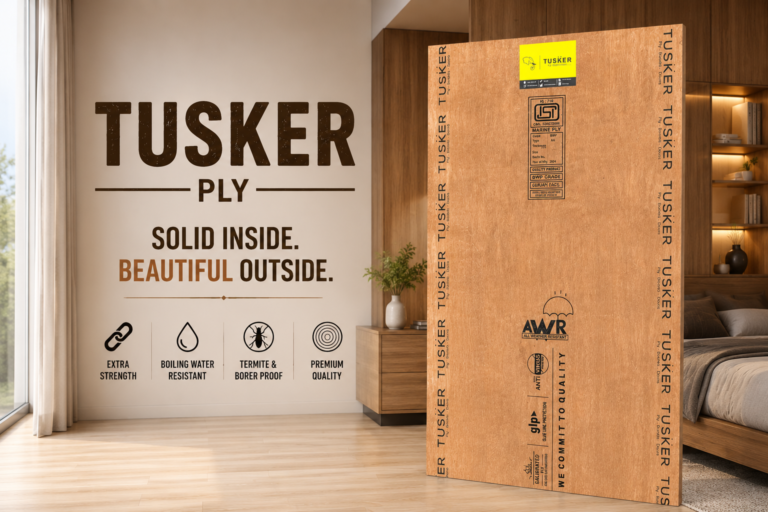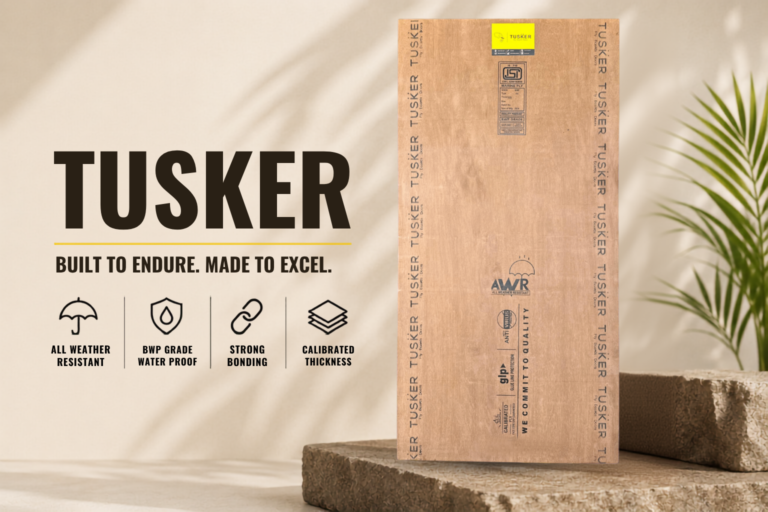
A kitchen is more than just a place where meals are prepared. It is one of the busiest areas in any home, constantly exposed to heat, steam, water, and daily wear and tear. That’s why selecting the right plywood for your kitchen is one of the most important decisions during interior planning.
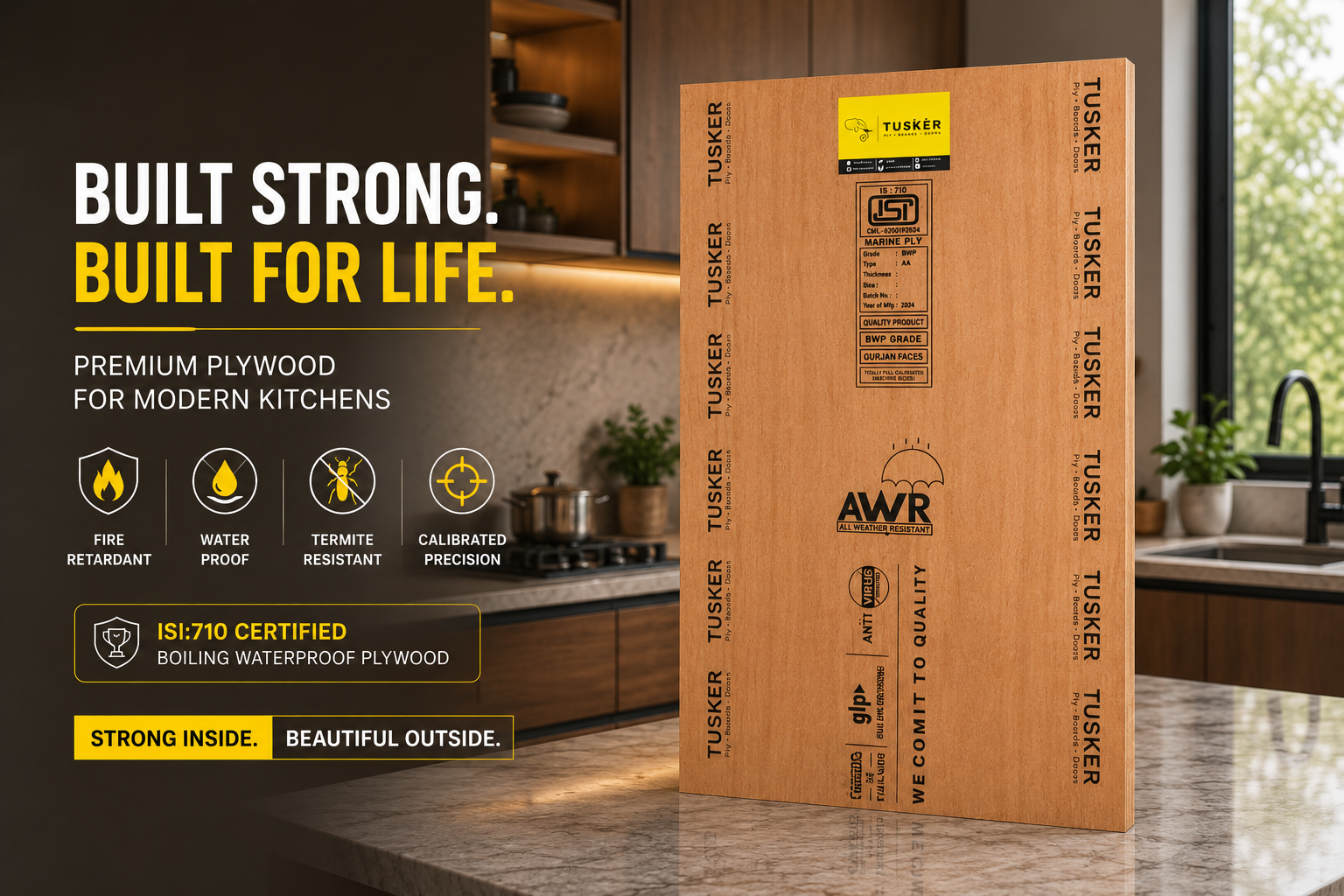
Tuskerply is designed for demanding kitchen environments, offering fire-retardant protection, ISI:710 waterproof performance, termite resistance, and calibrated precision. The result is a kitchen interior built to withstand years of everyday use while maintaining its strength and appearance.
Why Kitchen Plywood Matters More Than Any Other Room
Imagine a homeowner who invests in beautiful kitchen cabinets but chooses ordinary plywood to reduce costs. Within a few years, cabinet edges begin to swell, laminates start peeling, and moisture damage becomes visible near the sink area.
This is a common issue because kitchens face conditions that most other rooms do not.
Daily exposure includes:
- Steam from cooking
- Heat from stoves and appliances
- Oil splashes
- Water spills
- Humidity
- Heavy utensils and storage loads
Over time, these factors can severely affect low-quality plywood.
Pro Tip
When planning a kitchen, think beyond appearance. The material inside your cabinets is just as important as the finish you see on the outside.
Which Plywood Is Best for Kitchen Cabinets?
Always Choose BWP Grade Plywood
Industry experts consistently recommend BWP (Boiling Water Proof) plywood for kitchens.
The most reliable option is plywood certified under ISI:710 standards because it is specifically designed to handle high-moisture environments.
Why BWP Plywood Works Better
Kitchen cabinets regularly face exposure to water and heat. BWP plywood is engineered to:
- Resist swelling
- Prevent delamination
- Maintain screw-holding strength
- Improve overall cabinet lifespan
- Deliver better structural stability
Whether it’s base cabinets, pantry units, or overhead storage, BWP-grade plywood provides dependable performance for years.
Pro Tip
Always verify ISI:710 certification before purchasing plywood for kitchens. It is one of the most important indicators of waterproof quality.
Why Fire-Retardant Plywood Is Becoming Essential
Modern kitchens contain multiple fire-risk elements, including:
- Gas stoves
- Electrical appliances
- Microwaves
- Chimneys
- Internal wiring systems
As homes become more technology-driven, kitchen safety becomes increasingly important.
The Growing Demand for Fire-Retardant Plywood
Many architects and interior designers now prefer fire-retardant plywood such as Tuskerply because it helps:
- Slow down flame spread
- Produce lower smoke levels
- Provide valuable response time during emergencies
- Improve overall household safety
This additional layer of protection is particularly valuable in apartments and high-rise residential buildings.
Real-World Scenario
Consider a minor electrical short circuit inside a cabinet. While no plywood can completely eliminate fire risk, fire-retardant plywood can help delay flame progression, potentially reducing damage and improving safety.
Pro Tip
Fire safety should be considered during the planning stage rather than after the kitchen is completed.
Waterproofing Is Non-Negotiable in Kitchen Interiors
Water is one of the biggest threats to kitchen furniture.
Areas particularly vulnerable include:
- Under-sink cabinets
- Dishwashing zones
- Wet storage compartments
- Areas near plumbing lines
- Floor-level cabinets
When moisture penetrates ordinary plywood, homeowners often notice:
- Bubbling surfaces
- Swollen edges
- Peeling laminates
- Fungus formation
- Structural weakening
Tuskerply uses a waterproof core structure and high-quality PF resin bonding to help resist these common problems.
Pro Tip
Even the best waterproof plywood performs better when combined with professional installation and proper sealing.
Features to Look for in Kitchen Plywood
Before making a purchase, evaluate plywood based on the following factors:
ISI:710 Certification
Ensures boiling waterproof performance and quality standards.
Fire-Retardant Technology
Provides an additional layer of safety in cooking environments.
Termite Resistance
Protects furniture from hidden internal damage.
Calibrated Thickness
Creates a smoother surface for laminates and finishes.
Hardwood Core Construction
Offers improved strength and load-bearing capability.
Zero Core Gaps
Reduces moisture pockets and structural weaknesses.
High Screw-Holding Strength
Essential for cabinet hinges, channels, and drawers.
Pro Tip
The best plywood is not simply waterproof—it should also offer strength, safety, stability, and long-term durability.
Best Areas to Use Premium Plywood in Kitchens
Different kitchen sections experience different levels of stress.
Base Cabinets
These cabinets face regular exposure to floor moisture and cleaning activities.
Under-Sink Units
One of the highest-risk areas for leaks and water damage.
Overhead Cabinets
Require strong yet dimensionally stable plywood to prevent sagging.
Countertop Support Structures
Need excellent load-bearing performance.
Tall Pantry Units
Require stability to prevent bending or warping over time.
Pro Tip
Using premium plywood only in visible areas may save money initially, but critical structural sections should never be compromised.
Regular Plywood vs Kitchen-Grade Plywood
Many homeowners focus only on initial cost, overlooking long-term performance.
Water Resistance
Regular plywood offers limited moisture protection, while Tuskerply provides advanced waterproof performance.
Fire Protection
Standard plywood typically lacks fire-retardant properties, whereas Tuskerply adds an extra layer of safety.
Lifespan
Kitchen-grade plywood can significantly outlast ordinary plywood when exposed to daily kitchen conditions.
Termite Resistance
Premium plywood incorporates stronger termite-resistant technologies.
Structural Stability
High-quality plywood maintains its shape and strength over time with minimal warping.
Maintenance Costs
Better materials often reduce repair and replacement expenses in the long run.
Real-Life Perspective
A homeowner may save money initially by choosing lower-cost plywood, but repeated repairs, replacements, and maintenance often end up costing significantly more over time.
Pro Tips Before Kitchen Installation
Seal All Exposed Edges
Edge sealing helps further reduce moisture penetration.
Choose Quality Laminates
Use laminates designed for heat and moisture resistance.
Invest in Good Hardware
Premium plywood performs best when paired with quality hinges and drawer channels.
Ensure Proper Ventilation
Good airflow helps maintain cabinet health and reduces moisture accumulation.
Schedule Regular Maintenance Checks
Inspect plumbing connections periodically to prevent hidden leaks.
Why Architects Prefer Tuskerply for Kitchens
Interior designers and contractors increasingly recommend Tuskerply because it combines multiple performance benefits in a single solution.
Key advantages include:
- Waterproof durability
- Fire-retardant safety
- Termite resistance
- Dimensional stability
- Superior finishing compatibility
- Long-term reliability
These qualities help reduce maintenance concerns while enhancing the lifespan of kitchen interiors.
Pro Tip
The true value of premium plywood becomes visible years after installation, when cabinets continue performing as intended without major repairs.
Final Thoughts
A kitchen is one area where compromising on plywood quality can lead to expensive consequences.
While lower-cost alternatives may seem attractive initially, they often result in:
- Frequent repairs
- Swelling and warping
- Laminate failures
- Reduced furniture lifespan
- Increased maintenance costs
Choosing a premium kitchen-grade plywood such as Tuskerply helps create kitchen interiors that remain strong, safe, and visually appealing for years.
The right plywood doesn’t just support cabinets—it supports the long-term performance of your entire kitchen.
Premium quality plywood built for durability, performance, and generations of trust.