Water always finds the weakest point first. Imagine a bathroom door after one monsoon season—slightly swollen at the bottom, edges rough, hinges loosening. It didn’t fail overnight. It failed because moisture slowly entered through unsealed edges, exposed core layers, and weak joints.
If you want your plywood door to last 10–15 years without damage, waterproofing isn’t optional—it’s essential.
In this guide, we’ll break down everything you need to know about waterproof doors, from choosing the right material to applying the perfect finish—step by step.
What Are Waterproof Plywood Doors?
Not all plywood doors are built the same. Their durability depends on:
- Core quality (internal layers)
- Type of adhesive resin used
- Surface treatment & finishing
Types of Plywood Doors Based on Usage
| Grade | Best For | Key Feature |
|---|---|---|
| MR (Moisture Resistant) | Bedrooms, living rooms | Handles light humidity |
| BWR (Boiling Water Resistant) | Kitchens, semi-humid areas | Moderate water resistance |
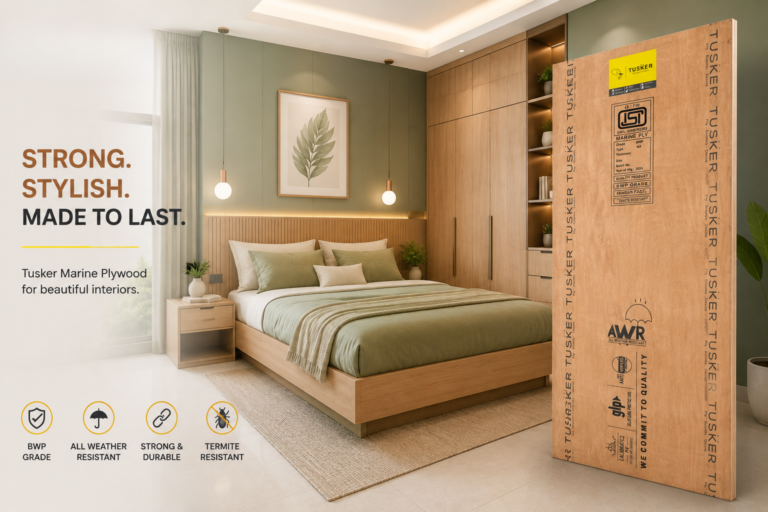
| BWP (Boiling Waterproof / Marine Grade) | Bathrooms, exterior doors | High water resistance |
Pro Tip: Always match the plywood grade to the environment, not just the room name.
Why Waterproofing Matters (Real-Life Scenario)
A homeowner installs a stylish plywood bathroom door but skips edge sealing. Within 2 monsoons:
- Bottom edge swells
- Laminate starts peeling
- Door doesn’t close properly
The issue wasn’t the door—it was incomplete waterproofing.
Key Takeaway: Even the best plywood fails without proper sealing and finishing.
Step-by-Step Guide: How to Waterproof a Plywood Door
1. Start with Edge Sealing (Most Important Step)
Edges are the weakest points where water enters first.
- Apply edge banding or sealant
- Focus on bottom edge + cut sections
Pro Tip: Always double-seal the bottom edge—it faces maximum moisture exposure.
2. Apply a Waterproof Primer
Primer acts as the first protective barrier.
- Improves coating adhesion
- Blocks moisture absorption
Pro Tip: Never apply paint or laminate directly on raw plywood.
3. Use Waterproof Coatings
Choose finishes that protect and enhance durability:
- Polyurethane (PU coating)
- Melamine finish
- Waterproof laminates
Pro Tip: PU coatings are best for long-term performance and premium look.
4. Choose High-Grade Plywood
For true waterproof doors:
- Use BWP (Boiling Waterproof) plywood
- Ensure void-free calibrated core
Pro Tip: Investing in higher grade reduces long-term repair costs.
5. Ensure Proper Installation
Even premium doors fail if poorly installed.
- Maintain gap from floor
- Seal joints & hinges properly
- Use professional fitting
Pro Tip: Keep at least 5–10 mm gap from the floor to avoid water contact.
Waterproofing Finishes That Combine Style + Protection
1. PU Lacquer Finish
- Smooth, premium look
- High water resistance
- Available in matte & gloss
Best For: Modern interiors
2. Veneer with Sealant Overlay
- Natural wood aesthetics
- Protected with waterproof coating
Best For: Living rooms & bedrooms
3. Duco Paint with Primer Base
- Clean, sleek look
- Strong surface protection
Best For: Contemporary homes
4. Marine Grade Base + Textured Coat
- Built for extreme conditions
- Weather-resistant finish
Best For: Exterior doors
5. Edge Banded Sealed Finish
- Clean edges
- Strong moisture protection
Best For: All door types
How to Choose the Right Waterproof Plywood Door
Key Factors to Consider
- Thickness:
- 30–35mm → Exterior
- 25–30mm → Interior
- Grade:
- BWP → Wet areas
- BWR → Kitchens
- MR → Dry areas
- Core Quality:
- Void-free
- Calibrated panels
- Certification:
- IS:710 (marine grade)
- IS:303 (standard grade)
Pro Tip: Certification matters more than brand claims—always verify before buying.
Why Choose Tuskerply for Waterproof Plywood Doors?
When it comes to Indian conditions—humidity, monsoon exposure, and temperature changes—you need plywood that performs consistently.
Core Strength
Tuskerply waterproof plywood is built using high-quality resin bonding, ensuring water resistance from inside—not just surface level.
Long-Term Durability
- Calibrated panels
- Strong internal bonding
- Minimal swelling or warping
Certified Performance
Tuskerply focuses on quality-tested plywood solutions that deliver durability across residential and commercial applications.
Pro Tip: Always compare plywood based on lifecycle performance, not just price.
Real-Life Applications of Waterproof Plywood Doors
- Bathrooms: Constant moisture → BWP required
- Kitchens: Steam cycles → BWR/BWP preferred
- Exterior Doors: Rain + heat → Marine grade essential
- Commercial Spaces: High usage → durability = cost saving
Key Insight: Right plywood = lower maintenance + longer lifespan
Common Mistakes to Avoid
Using MR plywood in bathrooms
Choosing based only on price
Skipping edge sealing
Ignoring certifications
Poor installation
Pro Tip: 80% of plywood door failures are due to wrong grade + poor sealing.
Final Checklist Before Buying
Before you finalize your plywood door, ask:
Is the plywood grade suitable for my space?
Are edges properly sealed?
Is waterproof coating applied correctly?
Am I prioritizing durability over short-term savings?
Conclusion: Build Doors That Last
A plywood door isn’t just about design—it’s about performance over time.
With the right combination of:
- High-grade plywood
- Proper waterproofing steps
- Smart finishing choices
You can ensure your doors stay strong, stylish, and damage-free for years.
Tuskerply waterproof plywood doors are designed to handle real-life conditions—so your investment stays protected, season after season.