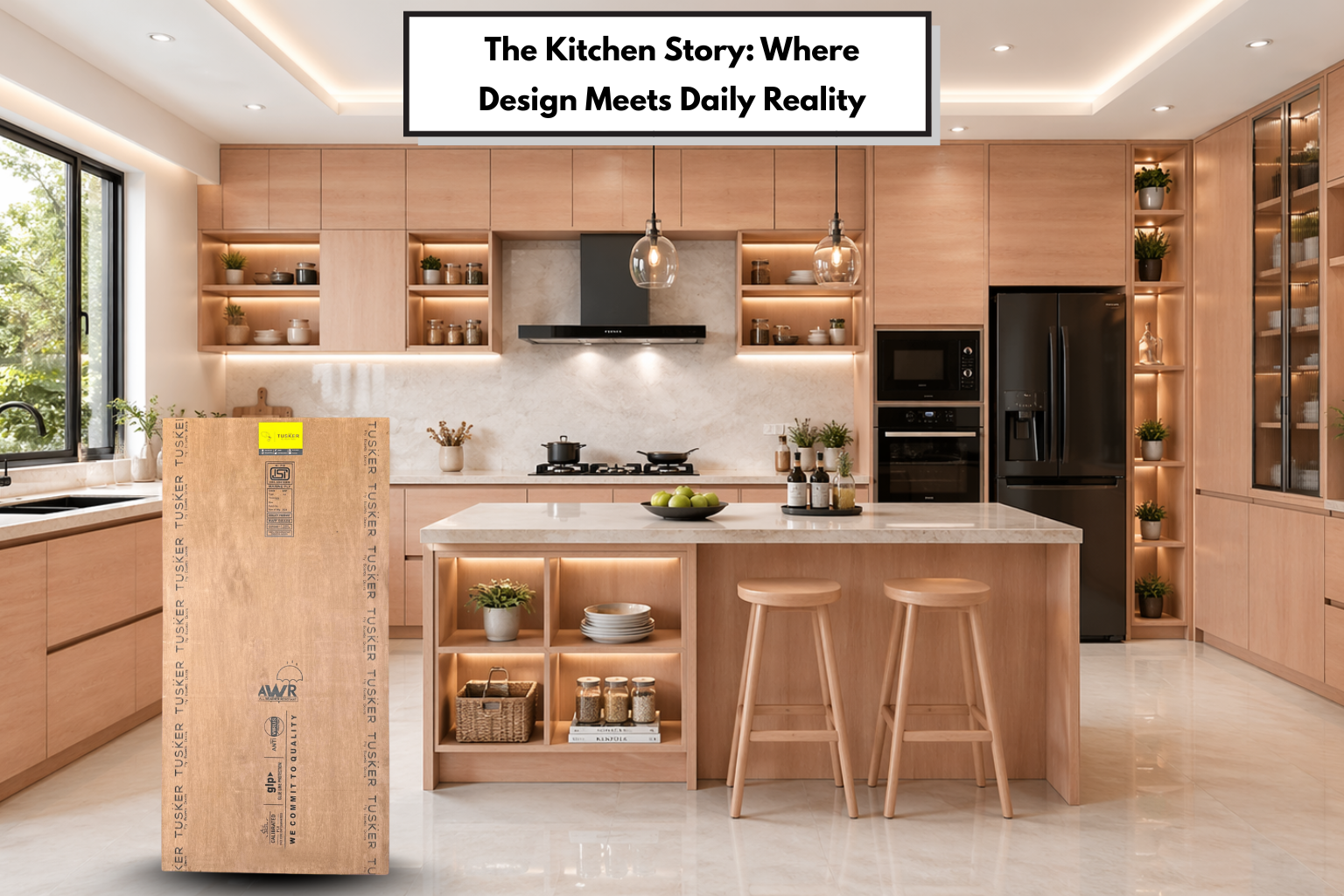
Every home has a space where life naturally unfolds—and that space is the kitchen. It’s where mornings begin with a cup of tea, where meals are prepared, and where families gather after long days.
But behind this warmth lies a constant battle: heat, steam, spills, and moisture. Over time, these factors silently damage cabinets, surfaces, and structures—especially when the wrong materials are used.
Imagine this:
You’ve invested in a beautiful modular kitchen interior design. Everything looks perfect. But within a year, the cabinets near the sink start swelling, the shutters lose alignment, and maintenance costs begin piling up.
This is where choosing waterproof kitchen interior materials becomes not just important—but essential.
Pro Tip:
Always prioritize durability over short-term cost savings. The right material choice can save you years of repair expenses.
What a Kitchen Truly Requires
Designing a kitchen isn’t just about aesthetics—it’s about performance under pressure.
A well-planned kitchen interior design must handle:
- Constant exposure to moisture
- Heat from cooking appliances
- Heavy daily usage
- Limited space (especially in small kitchen interior design)
For example, in compact urban homes, storage and material durability go hand in hand. Choosing the wrong material in a small kitchen can quickly lead to clutter, damage, and inefficiency.
Pro Tip:
For small kitchen interior design, choose multi-functional storage + moisture-resistant materials to maximise both space and longevity.
Understanding the Best Materials for Kitchen Interiors
Choosing the right material is the foundation of a long-lasting kitchen. Let’s break down the most effective options:
1. Plywood – The Backbone of Strong Kitchens
Plywood remains one of the most trusted materials for kitchen cabinetry.
- Waterproof plywood sheets are ideal for sink areas and base cabinets
- High strength and durability
- Excellent resistance to moisture when properly treated
Real Scenario:
A homeowner installs standard wood cabinets under the sink. Within months, water leakage causes swelling. Replacing them costs double the original investment.
Switching to waterproof plywood could have prevented this entirely.
Pro Tip:
Use waterproof plywood only for wet zones—never compromise here.
2. PVC Boards – Low Maintenance & Modern
PVC boards are widely used in modular kitchen interiors due to their practical advantages:
- 100% water-resistant
- Lightweight
- Termite-proof
- Minimal maintenance
They are especially popular for shutters and panels where moisture exposure is frequent.
Pro Tip:
Use PVC boards for visible surfaces like shutters, where both durability and finish matter.
3. HDHMR Boards – Style with Strength (Dry Areas Only)
HDHMR (High-Density High Moisture Resistant) boards offer:
- Smooth and premium finish
- High density for durability
- Ideal for decorative elements
However, they perform best in dry zones, not direct water exposure.
Pro Tip:
Use HDHMR boards for decorative panels and upper cabinets, not near sinks.
4. Water Resistant Plywood – Budget-Friendly Choice
This is a cost-effective option for areas with limited moisture exposure, such as:
- Wall cabinets
- Overhead storage
While not fully waterproof, it provides moderate durability.
Pro Tip:
Use water-resistant plywood only in low-risk areas to optimise kitchen interior cost.
Smart Comparison of Kitchen Interior Materials
| Material Type | Key Strength | Best Use Area |
|---|---|---|
| Waterproof Plywood | High durability & full water resistance | Sink units, base cabinets |
| PVC Boards | 100% water resistant & low maintenance | Shutters, panels |
| HDHMR Boards | Smooth finish & high density | Decorative panels, dry areas |
| Water Resistant Plywood | Budget-friendly & moderate durability | Wall cabinets |
Key Insight:
The best kitchen interior design is not about using one material—it’s about using the right material in the right place.
Design Ideas for Modern Kitchens That Actually Work
A modern kitchen isn’t just stylish—it’s efficient and practical.
Here’s how you can balance both:
- Use neutral tones and glossy finishes for a clean look
- Install pull-out drawers and vertical storage units
- Optimise layout for smooth workflow in modular kitchen interior design
- Combine materials strategically for performance and cost control
Example:
A well-designed kitchen uses waterproof plywood for base cabinets, PVC shutters for easy cleaning, and HDHMR panels for aesthetics—creating a perfect blend of durability and style.
Pro Tip:
Always design your kitchen based on daily usage patterns, not just visual appeal.
Essential Features to Look for in Kitchen Materials
When selecting materials, focus on features that directly impact performance:
- Moisture and water resistance
- High load-bearing strength
- Termite and borer protection
- Fire resistance
- Dimensional stability
These features ensure your kitchen stays strong, safe, and hygienic over time.
Pro Tip:
Always check for certifications and quality standards before purchasing materials.
Tuskerply Solutions for Durable Kitchens
Tuskerply offers advanced solutions designed to handle the real challenges of kitchen environments.
Tuskerply Club 500 Plywood
- Strong structural performance
- Fire safety compliance
- Low emission for healthier homes
Tuskerply Platinum Plywood
- Enhanced waterproofing technology
- Fire-resistant properties
- Anti-bacterial protection
- Long-term durability
These products help homeowners create kitchens that are:
- Long-lasting
- Safe
- Visually appealing
All while keeping the kitchen interior cost under control.
Pro Tip:
Invest in premium plywood for long-term savings, not just initial affordability.
Where Most Kitchen Designs Go Wrong
Many homeowners focus only on design and ignore material quality. This leads to expensive mistakes like:
- Using standard boards in wet areas
- Ignoring cabinet thickness requirements
- Choosing materials based only on price
- Skipping quality certifications
- Poor installation and finishing
Real Scenario:
A beautifully designed kitchen fails within 2 years due to low-quality materials—leading to complete renovation costs.
Pro Tip:
Think long-term: cheap materials = expensive repairs.
Conclusion: Build a Kitchen That Lasts
Your kitchen is more than just a design—it’s a long-term investment.
Choosing the right materials—especially waterproof plywood sheets—ensures:
- Durability
- Low maintenance
- Better hygiene
- Cost efficiency over time
With Tuskerply’s range of high-performance materials, you can create a kitchen that is both functional and visually stunning—without compromise.
A well-planned kitchen interior design is not just about how it looks today, but how well it performs for years to come.