Choosing the right plywood for your home or furniture project can be confusing, especially when terms like MR plywood and BWP plywood are often used interchangeably. Many homeowners assume that all plywood is waterproof, only to discover later that moisture damage can lead to swelling, delamination, or reduced furniture lifespan.
Understanding the difference between BWP plywood and MR grade plywood helps you select the right material for the right environment. Whether you are building wardrobes, kitchen cabinets, or outdoor furniture, choosing the correct plywood ensures durability, safety, and long-term performance.
This guide explains the key differences between MR plywood and BWP plywood, their features, certifications, pricing, and best applications.
Understanding MR Plywood and BWP Plywood
Before comparing them, it’s important to understand what these two plywood grades actually mean.
MR Plywood (Moisture Resistant Plywood)
MR plywood is designed for interior environments where exposure to moisture is minimal. It uses special adhesives that can withstand occasional humidity but cannot handle prolonged water exposure.
For example, furniture in bedrooms, living rooms, and study rooms often uses MR plywood because these spaces remain dry most of the time.
Pro Tip:
Use MR plywood for indoor furniture that stays away from water sources such as wardrobes, beds, and TV units.
BWP Plywood (Boiling Water Proof Plywood)
BWP plywood is manufactured with high-quality phenolic resins and strong bonding technology, making it completely waterproof and highly durable.
It is designed to withstand continuous exposure to water, humidity, and temperature changes, which makes it ideal for kitchens, bathrooms, and outdoor applications.
Imagine a modular kitchen cabinet placed near the sink. With regular splashes and steam, ordinary plywood may swell. BWP plywood prevents such damage and keeps the structure stable for years.
Pro Tip:
If your furniture will be exposed to water, humidity, or outdoor conditions, BWP plywood is the safest investment.
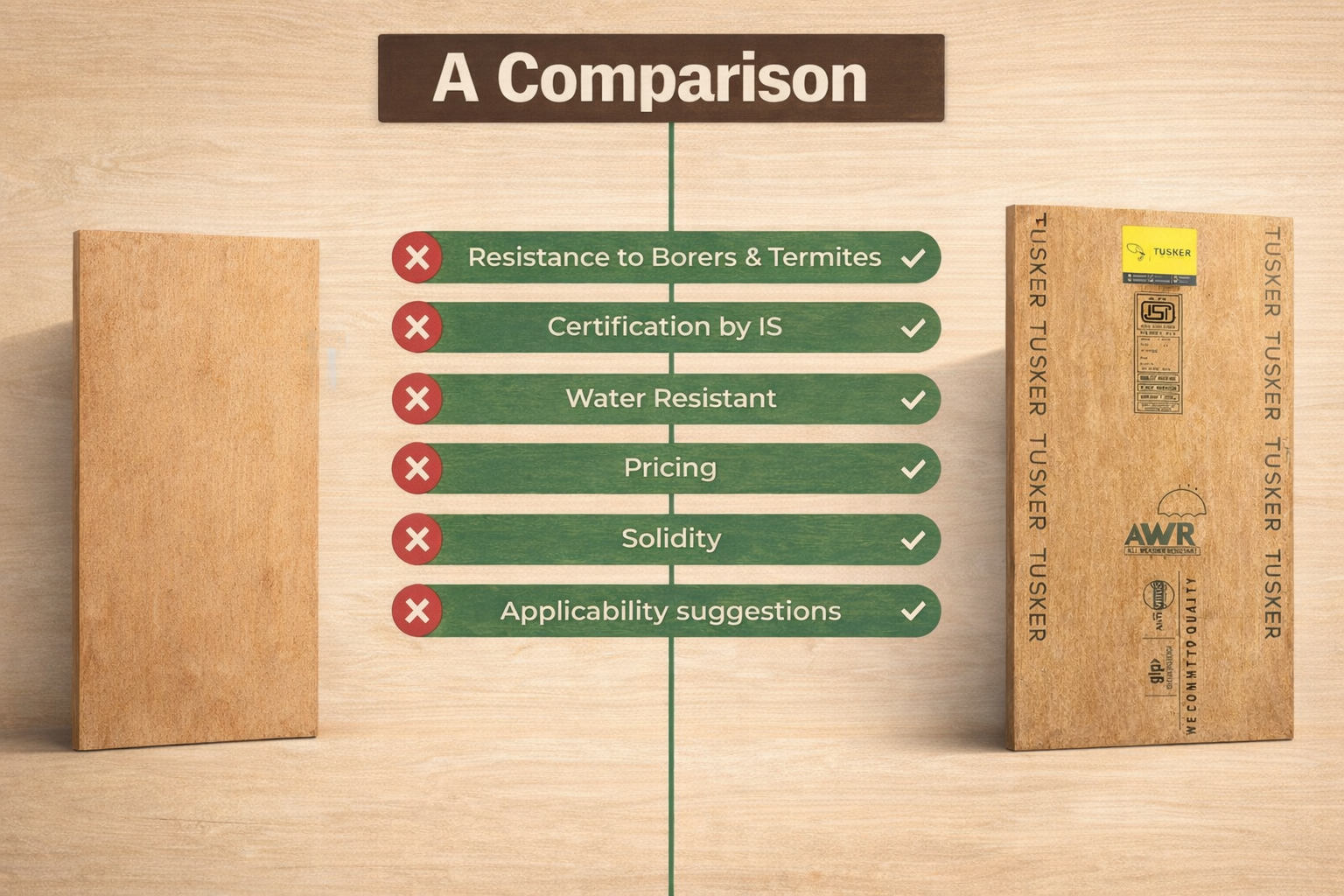
Key Differences Between BWP Plywood and MR Grade
Understanding the differences helps homeowners, contractors, and interior designers choose the correct plywood grade for each application.
1. Resistance to Termites
Termite damage can destroy furniture from within. This is why plywood manufacturers incorporate chemical treatments and protective additives.
- MR Plywood: Offers good termite resistance through treated adhesives. Tuskerply MR plywood also comes with reliable quality assurance, ensuring long-term durability for indoor furniture.
- BWP Plywood: Provides enhanced termite resistance along with additional durability features and long-lasting structural stability.
Real-World Example:
If a wardrobe made from untreated wood is placed in a humid environment, termites may attack it over time. However, plywood with proper termite resistance significantly reduces this risk.
Pro Tip:
Always choose termite-resistant plywood, especially for long-term furniture investments.
2. BIS Certification Standards
In India, plywood quality is regulated by the Bureau of Indian Standards (BIS).
- MR Plywood: Certified under IS 303, which covers general-purpose plywood used in interior environments.
- BWP Plywood: Certified under IS 710, the highest standard for waterproof plywood.
The IS 710 certification ensures that the plywood can withstand boiling water conditions without losing its structural strength.
Tuskerply BWP plywood follows strict manufacturing standards designed to deliver reliable performance even in moisture-prone environments.
Pro Tip:
Before purchasing plywood, check the IS certification stamp to ensure quality and durability.
3. Water Resistance
Water resistance is one of the biggest factors when choosing between MR plywood and BWP plywood.
MR Plywood
- Moisture resistant, not waterproof
- Suitable for dry interior spaces
- Can tolerate humidity but not direct water exposure
BWP Plywood
- Completely waterproof
- Can withstand boiling water tests
- Highly durable in kitchens, bathrooms, and outdoor spaces
Real-Life Scenario:
A kitchen cabinet made with MR plywood may swell after years of exposure to steam and water. In contrast, BWP plywood remains stable even under heavy moisture conditions.
Pro Tip:
For kitchen cabinets, sink units, or bathroom furniture, always choose BWP plywood.
4. Pricing
Cost is often a deciding factor when selecting plywood.
- MR Plywood: Budget-friendly and suitable for interior furniture.
- BWP Plywood: More expensive due to superior manufacturing processes and waterproof properties.
While BWP plywood costs more initially, it can save money in the long run by reducing repairs and replacements.
Pro Tip:
Use MR plywood for dry areas and reserve BWP plywood for moisture-prone spaces to balance cost and durability.
5. Strength and Durability
The strength of plywood depends on factors like number of plies, density, and adhesive quality.
- MR Plywood: Strong and durable for interior furniture applications.
- BWP Plywood: Offers superior strength, stability, and long-term durability, especially in challenging environments.
Tuskerply BWP plywood is engineered to deliver excellent load-bearing capacity and long-term performance, making it suitable for demanding residential and commercial applications.
Pro Tip:
For furniture that must last for decades, such as modular kitchens or outdoor cabinets, BWP plywood is the better choice.
Comparison Table: MR Plywood vs BWP Plywood
| Feature | MR Plywood | BWP Plywood |
|---|---|---|
| Water Resistance | Moisture Resistant | Completely Waterproof |
| BIS Certification | IS 303 | IS 710 |
| Termite Resistance | High | Enhanced |
| Ideal Use | Interior Furniture | Kitchens, Bathrooms, Outdoor Areas |
| Cost | Affordable | Premium |
Applications of MR and BWP Plywood
Understanding where each plywood type performs best helps ensure better durability and value for money.
MR Plywood Applications
MR plywood works best in dry interior spaces.
Common uses include:
- Beds and bedroom furniture
- Wardrobes and storage cabinets
- Sofas and chairs
- Tables and study desks
- TV units and decorative panels
Tuskerply MR plywood provides reliable strength and smooth finishing, making it a practical choice for everyday interior furniture.
Pro Tip:
Always ensure proper laminate or veneer finishing on MR plywood furniture to improve durability and appearance.
BWP Plywood Applications
BWP plywood is ideal for high-moisture environments.
Typical applications include:
- Modular kitchen cabinets
- Bathroom storage units
- Sink cabinets
- Outdoor furniture
- Utility areas exposed to water
Real-World Example:
In coastal cities where humidity levels are high, BWP plywood ensures furniture remains stable and strong despite changing weather conditions.
Tuskerply BWP plywood is designed to withstand moisture, heat, and environmental changes while maintaining structural integrity.
Pro Tip:
When building a modular kitchen, always use BWP plywood for the base cabinets, as they are closest to water sources.
Final Thoughts: Choosing the Right Plywood for Your Project
Both MR plywood and BWP plywood have their own strengths and applications. The right choice depends on where and how the plywood will be used.
- Choose MR plywood for interior furniture in dry environments.
- Choose BWP plywood for kitchens, bathrooms, and outdoor areas where water exposure is common.
By understanding these differences, homeowners and designers can avoid costly repairs, improve furniture durability, and ensure long-term structural stability.
Tuskerply plywood solutions combine strength, durability, and reliable performance, helping homeowners and professionals build furniture that lasts for years.
Selecting the correct plywood grade is not just about cost—it is about matching the material to the environment where it will perform best.