A guest room may not be used every day, but that doesn’t mean it should feel like an afterthought. In many homes, the guest bedroom becomes a convenient storage area, a spare bed gets pushed into a corner, and furniture is selected based on whatever space is left over.
The result? A room that technically works but doesn’t necessarily make guests feel comfortable.
The best guest room design ideas focus on creating a space that feels welcoming, functional, and easy to maintain. Think about the experience from your guest’s perspective: they should have a comfortable bed, enough space for their belongings, convenient lighting, and a room that feels thoughtfully planned.
For example, imagine a relative arriving for a week-long stay. Instead of keeping their suitcase on the floor because there is no storage, they can unpack into a dedicated wardrobe. Instead of getting out of bed to switch off the main light, they have an accessible bedside lamp. Small decisions like these can dramatically improve the guest experience.
Pro Tip: Design the room around what a guest needs during a short stay—not simply around the furniture you already have.
What Is the Space Actually Asking From You?
The primary purpose of guest room interior design is simple: make someone who doesn’t live in your home feel comfortable and independent.
A well-designed guest bedroom should ideally provide:
- A comfortable bed with sufficient circulation space
- Dedicated storage for clothes and luggage
- Convenient bedside surfaces
- Layered lighting for different activities
- Good ventilation and natural light
- Easy-to-maintain furniture and surfaces
- Enough open space to prevent the room from feeling crowded
Think About the Guest Journey
Consider what happens when someone enters the room.
They put their luggage down, change clothes, charge their phone, sleep, read, get ready in the morning, and eventually pack everything back up.
Your guest bedroom ideas should account for these everyday actions.
For instance, placing a wardrobe close to the entrance makes clothing storage convenient. A bedside table with an accessible charging point eliminates unnecessary movement at night. A mirror near the dressing area makes the morning routine easier.
Pro Tip: Walk through the room mentally as if you were a first-time guest. Every inconvenience you identify is an opportunity to improve the design.
Best Material Choices You Can Make
Furniture in a guest room may experience irregular usage. However, occasional use doesn’t mean you should compromise on material quality.
In fact, a room that remains closed for long periods can still be exposed to changes in humidity and temperature. Choosing a reliable material for wardrobes, beds, wall panels, and other built-in furniture helps maintain durability and appearance over time.
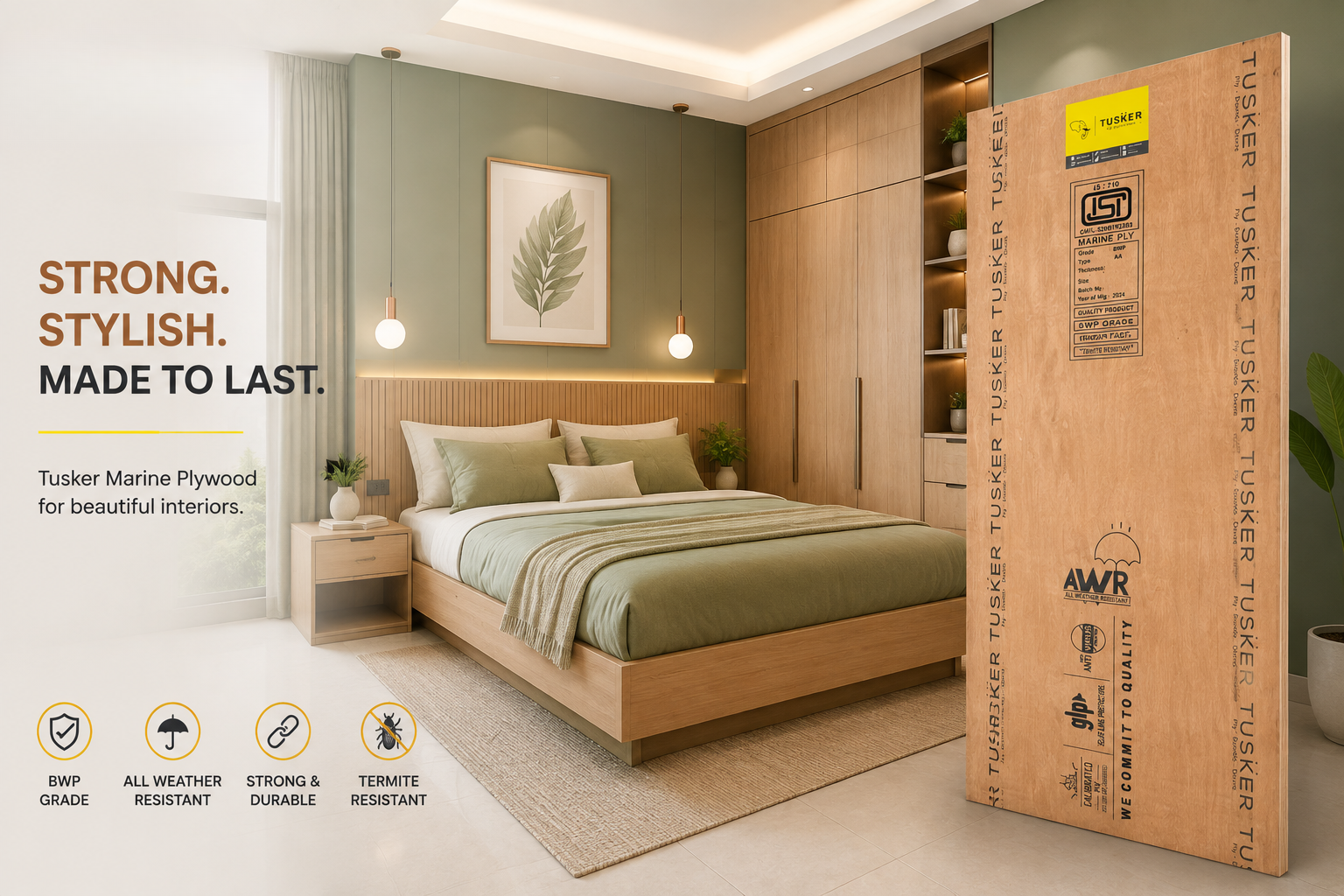
Tuskerply can be considered when selecting plywood for applications where strength, stability, and long-term performance are important.
Recommended Material Approach
| Application | Recommended Material | Typical Thickness |
|---|---|---|
| Wardrobe/storage unit | Tuskerply plywood | 18mm |
| Bed frame | Tuskerply plywood | 18mm |
| False ceiling framework | Suitable Tuskerply MDF/board solution | 6–9mm |
| Wall panel/headboard | Tuskerply plywood | 12mm |
The exact specification should be selected according to the furniture design, span, load, hardware, and installation requirements.
Why Material Selection Matters
A wardrobe is opened and closed repeatedly during every guest’s stay. A bed frame carries significant load. A headboard may need to support decorative elements, upholstery, or lighting.
Choosing the right board for the right application can help:
- Improve furniture strength
- Reduce the risk of premature deterioration
- Create a more refined finish
- Support long-term usability
- Make maintenance easier
Pro Tip: Don’t select plywood only by thickness. Consider the application, expected load, environmental conditions, finish, hardware, and workmanship together.
Take Inspiration From These Design & Layout Ideas!
There are plenty of ways to create a welcoming guest bedroom without making the room unnecessarily complicated.
1. Built-In Wardrobe With Dedicated Guest Storage
A compact two-door wardrobe can provide sufficient hanging space and shelving without consuming too much floor area.
Use a combination of:
- Hanging space
- Adjustable shelves
- Small drawers
- A dedicated luggage section
This is especially useful for a small guest room design, where every square foot matters.
Pro Tip: Keep at least one section of the wardrobe completely free before guests arrive. Empty storage feels much more welcoming than a wardrobe packed with household items.
2. Upholstered Headboard Wall Panel
A headboard can become the visual focal point of the room.
A plywood-backed upholstered panel behind the bed can add softness and warmth while creating a more premium, hotel-inspired appearance.
You can combine:
- Fabric upholstery
- Wood accents
- Subtle wall lighting
- Vertical or horizontal panel detailing
Pro Tip: Keep the headboard design visually calm. A guest room should feel relaxing rather than overly decorative.
3. False Ceiling Design for Guest Room
You don’t need an elaborate ceiling to transform the atmosphere.
A simple perimeter tray or recessed ceiling can introduce layers of lighting without requiring major structural changes.
Consider combining:
- Recessed downlights
- Soft ambient lighting
- Cove lighting
- Focused bedside illumination
The result can be a warmer and more comfortable environment than relying on a single ceiling fixture.
Pro Tip: Use separate lighting controls wherever possible. Guests should be able to choose between bright functional lighting and softer evening illumination.
4. Floating Bedside Units
Floating bedside tables are particularly useful in compact rooms.
Because they are mounted off the floor, they:
- Make cleaning easier
- Visually open up the floor
- Reduce furniture bulk
- Provide convenient storage
- Create a contemporary appearance
They can also incorporate concealed drawers or open shelves for books, phones, and personal items.
Pro Tip: Keep the bedside surface large enough for a phone, water bottle, lamp, and a few personal items without making it oversized.
5. Dual-Purpose Furniture
A guest room doesn’t necessarily need separate furniture for every function.
A built-in desk can double as a dressing table. A window-side bench can provide seating as well as additional storage. A compact cabinet can combine luggage storage with a coffee or utility station.
This approach is particularly valuable when planning small guest room design ideas for apartments.
Pro Tip: Prioritise furniture that performs two functions without making either function difficult to use.
6. Add Natural Wood Warmth
If the room feels too plain, natural wood tones can add warmth without overwhelming the space.
Wood-look finishes can be introduced through:
- Wardrobe shutters
- Headboard panels
- Bedside units
- Study desks
- Decorative wall elements
The goal is to create visual warmth while maintaining a clean and contemporary guest bedroom.
Pro Tip: Use one dominant wood tone and repeat it across two or three elements for a coordinated appearance.
Cost Estimation Guide
The cost of a guest room depends on the room size, material selection, design complexity, hardware, finish, lighting, labour, and location.
A broad planning estimate can help you establish a preliminary budget.
| Element | Material Cost (Approx.) | Labour Cost (Approx.) |
| Built-in wardrobe | ₹12,000 – ₹25,000 | ₹4,000 – ₹8,000 |
| Upholstered headboard panel | ₹5,000 – ₹12,000 | ₹2,000 – ₹4,000 |
| False ceiling with lighting | ₹8,000 – ₹20,000 | ₹5,000 – ₹10,000 |
| Floating bedside units | ₹3,000 – ₹8,000 | ₹1,500 – ₹3,000 |
Note: These are indicative ranges and can vary significantly depending on city, room size, plywood grade, finish, hardware, design complexity, and labour rates. Consult a local Tuskerply dealer or interior professional for current material pricing and project-specific estimates.
How to Control Your Guest Room Budget
If you’re working with a limited budget, prioritise the elements guests interact with most.
Start with:
- A comfortable bed
- Functional wardrobe/storage
- Good lighting
- Quality furniture materials
- A well-designed headboard
- Decorative elements
You don’t need an expensive design to create a premium-looking guest room. Good proportions, appropriate materials, clean detailing, and thoughtful lighting often have a greater impact than excessive decoration.
Pro Tip: Spend first on functionality and durability, then add decorative elements as your budget allows.
Avoid These Common Mistakes
1. Treating Storage as Optional
Guests shouldn’t have to keep their clothes in a suitcase throughout their stay.
Even a slim wardrobe with basic hanging and shelf space can make a significant difference.
Better approach: Provide dedicated storage and leave some of it empty for guests.
2. Using Only One Light Source
A single bright overhead light can make the room feel functional but impersonal.
Instead, combine ambient, task, and accent lighting.
Better approach: Add bedside lights and soft accent lighting alongside the main ceiling fixture.
3. Choosing Low-Grade Materials
Occasional use doesn’t eliminate the need for durable furniture.
Humidity, temperature fluctuations, loading, and repeated opening and closing can all affect furniture over time.
Better approach: Select appropriate-quality boards such as Tuskerply plywood based on the specific application.
4. Ignoring Edge Finishing
Exposed plywood edges can affect both appearance and durability.
Proper edge-banding and finishing create a cleaner appearance and help protect exposed edges from everyday wear.
Better approach: Ensure visible edges receive appropriate edge-banding and finishing during installation.
5. Filling Every Inch of the Room
More furniture doesn’t necessarily mean more functionality.
Overcrowding can make even a reasonably sized guest bedroom feel smaller.
Better approach: Maintain clear circulation around the bed, wardrobe, and entrance.
Trust Tuskerply While Designing Your Guest Room
Whether you’re planning a compact small guest room design for an apartment or a complete guest room interior design makeover for a larger home, the material foundation plays an important role in the final result.
A thoughtfully designed guest room combines comfort, storage, lighting, aesthetics, and durable materials. When these elements work together, even a relatively simple room can feel warm, organised, and inviting.
Tuskerply can be considered as part of your material selection process when planning plywood-based guest room furniture and interior applications.
The objective isn’t simply to create a beautiful room. It’s to create a space where your guests can arrive, unpack, relax, sleep comfortably, and feel genuinely at home.
Pro Tip: Before finalising your design, create a simple checklist covering storage, lighting, circulation, furniture dimensions, material specifications, and maintenance. It can help prevent expensive changes later.