A bed frame is more than just furniture. It supports your body weight every night, holds the mattress in shape, and absorbs daily stress for years. Yet, many homeowners focus only on design, polish, or storage space while ignoring the most important factor — the plywood inside the structure.
Imagine this: A newly made bed looks premium from the outside, but within a year, the frame starts squeaking, joints loosen, and the surface begins sagging. The problem often isn’t the carpenter. It’s the wrong plywood grade, incorrect thickness, or poor internal core strength.
That’s why choosing the best plywood for bed frames matters.
In this guide, Tuskerply will help you understand which plywood is best for a bed, how plywood strength affects durability, and what specifications truly matter when building a long-lasting plywood bed frame.
Why Plywood Is the Best Choice for Bed Frames
In modern Indian homes, plywood has become the most trusted material for bed frames because of its strength, durability, and long-term stability.
Unlike solid wood that can crack over time or MDF that may sag under weight, durable plywood is engineered with multiple cross-layered veneers. This layered construction distributes weight evenly and prevents bending or warping.
Real-Life Example
Think about a king-size storage bed in a family home. Every day, it handles:
- Mattress weight
- Two or more people
- Kids jumping on the bed
- Storage load underneath
- Seasonal humidity changes
A weak board may fail within months. High-quality plywood strength ensures the structure remains stable for years.
Pro Tip
Always choose plywood specifically designed for structural furniture instead of decorative panels.
What Defines a Strong Plywood Bed Frame?
The strength of a plywood bed frame depends on multiple factors, not just thickness. Let’s break them down one by one.
1. Core Material Matters the Most
The internal core determines the actual load-bearing capacity of the plywood.
Hardwood core plywood provides:
- Better screw holding strength
- Higher durability
- Stronger load resistance
- Longer furniture life
This is why premium plywood brands use hardwood cores for heavy furniture applications like beds and wardrobes.
Why It Matters
A strong core prevents:
- Joint loosening
- Cracking sounds
- Bending under pressure
- Long-term sagging
Pro Tip
When purchasing plywood for bed frames, always ask whether the plywood uses a hardwood core or mixed wood core.
2. Choosing the Right Plywood Thickness
Thickness directly affects structural stability.
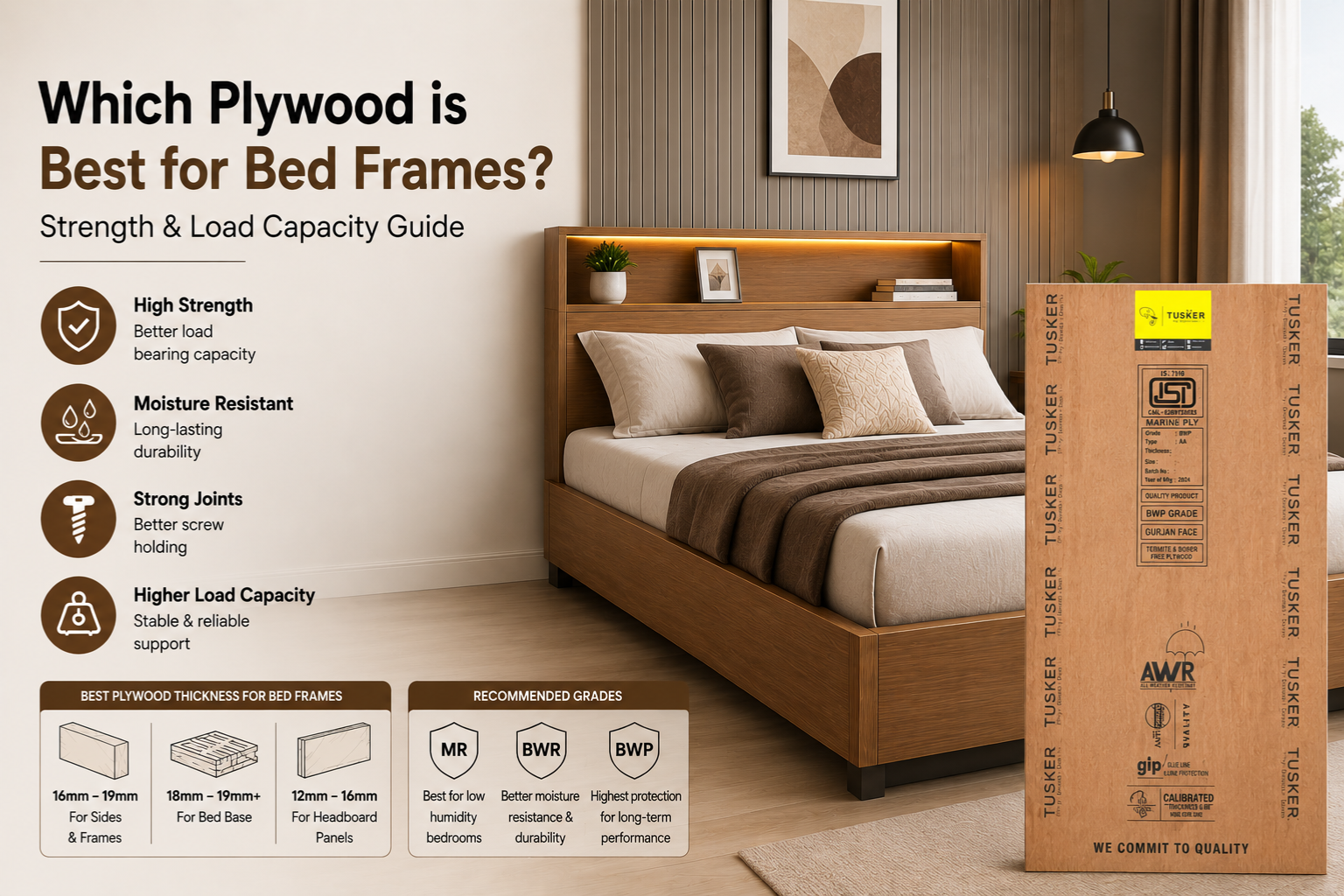
For plywood bed frames, these thicknesses work best:
| Bed Component | Recommended Thickness |
|---|---|
| Side Panels & Frame | 16mm to 19mm |
| Bed Base | 18mm to 19mm+ |
| Headboard Panels | 12mm to 16mm |
The thicker the plywood, the better the weight distribution and durability.
Storytelling Example
Many homeowners invest heavily in premium mattresses but install them on weak 12mm plywood bases. Within months, the center area starts sinking because the board cannot handle continuous load pressure.
A properly specified 19mm durable plywood frame avoids this issue entirely.
Pro Tip
For king-size beds or storage beds, never compromise below 18mm thickness for the base section.
3. Understanding Plywood Grades for Beds
Different plywood grades perform differently depending on moisture exposure and room conditions.
MR Grade Plywood
MR (Moisture Resistant) plywood is suitable for:
- Bedrooms with low humidity
- Dry indoor environments
- Basic furniture applications
It works well in apartments or upper-floor bedrooms with controlled moisture levels.
BWR Grade Plywood
BWR (Boiling Water Resistant) plywood offers:
- Better moisture resistance
- Stronger bonding
- Higher durability
- Longer furniture life
This makes it ideal for:
- Storage beds
- Humid regions
- Ground-floor homes
- Bedrooms near bathrooms
BWP Grade Plywood
BWP (Boiling Water Proof) plywood delivers maximum protection against moisture and structural weakening.
It is best suited for:
- Coastal regions
- High-humidity environments
- Premium long-term furniture
Pro Tip
For long-lasting bed frames, BWR or BWP grade plywood is usually the safest investment.
Which Ply Is Best for a Bed?
When comparing furniture materials, plywood consistently performs better for structural furniture like beds.
| Material | Strength Level | Best Use Case | Suitability for Bed Frames |
|---|---|---|---|
| Plywood | High | Structural furniture | Highly Recommended |
| MDF | Medium | Decorative panels | Not Ideal |
| Blockboard | Medium-High | Doors & partitions | Limited Use |
| Particle Board | Low | Budget furniture | Not Recommended |
Why Durable Plywood Performs Better
Durable plywood:
- Handles continuous load better
- Holds screws tightly
- Resists cracking
- Maintains shape over time
- Performs well in Indian weather conditions
Pro Tip
Avoid MDF for bed bases or structural frames, especially in humid areas.
Best Plywood for Different Types of Beds
1. Storage Beds
Storage beds carry additional weight because of drawers and lifting mechanisms.
Recommended:
- BWR or BWP grade plywood
- 19mm thickness minimum
2. King-Size Beds
Large bed frames need stronger support due to wider spans.
Recommended:
- Hardwood core plywood
- Thick base support
- Strong internal framing
3. Kids’ Beds
Children often jump or play on beds, increasing impact pressure.
Recommended:
- High screw-holding plywood
- Extra-thick support panels
Pro Tip
For children’s furniture, prioritize strength over decorative finish.
Price of Plywood for Bed Frames
The price of plywood depends on several important factors.
Thickness
Thicker plywood costs more because it offers higher load capacity and durability.
Grade
MR plywood is generally more affordable, while BWR and BWP grades cost more due to stronger waterproof bonding.
Furniture Design
Storage beds and hydraulic beds require more material and stronger structural components.
Brand Quality
Trusted brands maintain:
- Consistent thickness
- Certified manufacturing standards
- Better internal core quality
Low-cost plywood may initially save money but often leads to expensive repairs later.
Pro Tip
Always compare long-term durability instead of only upfront pricing.
E-Commerce Buying Tips for Plywood
Buying plywood online can be convenient, but only if you verify the specifications carefully.
1. Check Actual Thickness
Low-quality boards often deliver less thickness than advertised.
Even a small thickness reduction affects load capacity significantly.
2. Verify Grade Certification
Look for proper IS certification to ensure product quality and reliability.
3. Don’t Use the Same Thickness Everywhere
Using 19mm plywood for decorative headboards increases cost unnecessarily.
Instead:
- Use thicker plywood for structural sections
- Use lighter panels for decorative surfaces
4. Buy from Authorised Dealers
Authorised dealers reduce the risk of duplicate or substandard plywood.
Pro Tip
Always inspect the plywood surface, edge quality, and internal layers before installation.
Common Mistakes to Avoid While Building a Plywood Bed Frame
Using Thin Plywood for the Base
The base handles maximum pressure. Thin plywood often bends over time.
Minimum recommendation:
- 18mm thickness
Using MR Grade in Humid Areas
Bedrooms near bathrooms or coastal regions need BWR or BWP plywood.
Ignoring Edge Banding
Exposed edges absorb moisture and weaken joints.
Proper edge banding:
- Improves durability
- Enhances finish quality
- Protects internal layers
Mixing Different Plywood Grades
Using multiple grades in one bed frame can create uneven expansion and structural instability.
Pro Tip
Maintain consistent plywood grade throughout the entire bed structure.
How Strong Plywood Improves Everyday Comfort
A strong plywood bed frame doesn’t just improve durability. It improves daily living.
Benefits include:
- No squeaking noises
- Better mattress support
- Improved furniture lifespan
- Stronger joint stability
- Better resistance against humidity
- Reduced repair costs
Over time, investing in durable plywood becomes more cost-effective than repeatedly repairing weak furniture.
Wrapping It Up
Choosing the best plywood for bed frames comes down to three essential factors:
- Correct plywood thickness
- Proper plywood grade
- Reliable plywood strength
For most modern homes:
- 18mm to 19mm plywood works best for structural sections
- BWR or BWP grades provide better long-term durability
- Hardwood core plywood offers stronger support and stability
A well-built plywood bed frame stays strong through years of daily use, seasonal weather changes, and growing family needs.
Tuskerply understands that furniture is not just about appearance. It’s about long-term performance, reliability, and peace of mind. Choosing durable plywood today means investing in stronger, quieter, and more dependable furniture for years to come.