Focus Keyphrase: how to check plywood quality
If you are planning to invest in furniture for your home or office, the quality of plywood you choose will decide how long that furniture lasts. A wardrobe that bends in a year or a kitchen cabinet that swells during monsoon usually traces back to one problem — poor plywood selection.
Many buyers focus only on price. Some trust whatever the retailer says. But if you truly want durable interiors, you must understand how to check plywood quality before buying.
This guide will help you make an informed, confident decision — whether you are a homeowner, architect, contractor, or interior designer working with tuskerply.
Start With the Basics – What Is Plywood?
Plywood is engineered wood made by bonding thin layers of wood veneers together. These layers are placed in alternating grain directions. This cross-grain construction increases strength, stability, and resistance to warping.
However, not all plywood sheets are equal. Quality depends on:
- Type of core wood
- Number of layers (ply count)
- Adhesive quality
- Pressing technology
- Surface finishing
- Manufacturing standards
Real-World Example
Imagine two wardrobes built in the same design. One uses low-grade plywood; the other uses certified plywood from tuskerply. After one monsoon season, the cheaper one swells at the edges and screws loosen. The better one remains stable and strong.
Pro Tip
Never judge plywood by appearance alone. Internal construction matters more than outer polish.
Look for These Signs of Good Plywood
1. Check the Layers (Ply Count)
When learning how to check plywood quality, start by examining the edge of the sheet.
What to do:
- Look at the side of the plywood.
- Count the number of visible layers.
- Ensure layers are uniform and tightly bonded.
For general furniture, 5 to 7 plies are common. For wardrobes and cabinets, 11 to 13 plies or more provide better strength.
Red flags:
- Visible gaps between layers
- Uneven thickness
- Layers separating easily
Pro Tip
Higher ply count usually means better load-bearing capacity and long-term durability.
2. Confirm the Grade – MR, BWR or BWP
Choosing the right grade is critical, especially in India where humidity varies.
Common grades:
MR (Moisture Resistant) – Best for dry areas like bedrooms and living rooms.
BWR (Boiling Water Resistant) – Ideal for kitchens and utility areas with moderate moisture exposure.
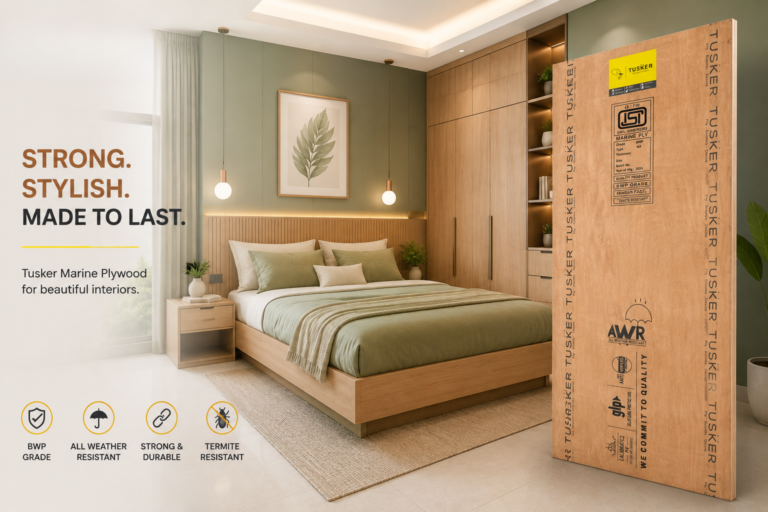
BWP (Boiling Water Proof) or Marine Grade – Suitable for bathrooms and high-moisture environments.
Always check for the grade stamp on the board. Do not rely only on verbal claims.
Pro Tip
Use BWR or BWP for kitchen cabinets. Spending slightly more now prevents expensive repairs later.
3. Inspect the Surface Quality
Run your hand across the plywood sheet.
What to check:
- Smooth and even surface
- No visible cracks
- No patches or core repairs
- Uniform color
If the veneer peels easily when lightly scratched, it indicates poor bonding.
Pro Tip
A good plywood sheet should feel dense, smooth, and solid.
4. Perform the Knock Test
This simple method is surprisingly effective.
Knock on different areas of the sheet:
- A solid, full sound indicates a dense core.
- A hollow sound suggests internal voids.
Internal gaps weaken screw holding strength and reduce lifespan.
Pro Tip
Always perform the knock test before finalizing bulk purchases for furniture projects.
5. Look for ISI Certification
In India, the ISI mark ensures plywood meets quality standards.
Check for:
- IS:303 (for MR and BWR grade)
- IS:710 (for BWP / Marine grade)
ISI certification ensures:
- Proper bonding strength
- Controlled moisture resistance
- Standardized manufacturing
Pro Tip
Certified plywood from trusted brands like tuskerply ensures compliance and reliability.
Plywood Types – Choosing the Right One
Understanding plywood types is part of knowing how to check plywood quality.
MR Plywood – Use for wardrobes and bedroom furniture.
BWR Plywood – Best for kitchen cabinets and workspaces.
BWP / Marine Plywood – Ideal for bathrooms and high-humidity zones.
Commercial Plywood – Good for partitions and general furniture.
Shuttering Plywood – Used for construction formwork, not interior furniture.
Pro Tip
Do not overspend on marine grade for dry areas. Match the grade to the environment.
How to Spot Fake or Low-Grade Plywood
Low-quality plywood often looks acceptable at first glance.
Watch out for:
- Extremely lightweight sheets
- No manufacturer stamp
- Strong chemical smell
- Edge crumbling
- Inconsistent thickness
Pro Tip
Always verify branding, certification, and supplier reputation before buying.
What’s the Best Plywood for Furniture?
The best plywood depends on application.
Living room furniture – Use BWR for better longevity.
Bedroom wardrobes – MR grade is generally sufficient.
Kitchen cabinets – Always use BWR or BWP.
Bathroom vanities – BWP grade is recommended.
For decorative finishes, choose laminated or veneered plywood options from trusted brands like tuskerply.
Pro Tip
Always check for termite-proof and borer-resistant treatment, especially in humid regions.
How to Choose the Right Thickness
Thickness affects stability and strength.
4mm to 6mm – Used for back panels and partitions.
12mm to 18mm – Ideal for cabinets, tables, and beds.
19mm and above – For heavy-load furniture and structural applications.
Pro Tip
For most furniture, 18mm plywood offers the best balance between strength and cost.
Questions to Ask Before Buying
Before finalizing your purchase, ask:
- What grade is this plywood?
- Is it ISI certified?
- What is the ply count?
- Is it termite and borer resistant?
- Is there a warranty?
- Can I see the manufacturer stamp?
Pro Tip
If the seller hesitates to show certification or branding, reconsider your purchase.
Final Checklist – How to Check Plywood Quality
Before buying, remember:
- Count the layers
- Check the grade (MR, BWR, BWP)
- Inspect surface and edges
- Perform the knock test
- Verify ISI certification
- Confirm thickness
- Check manufacturer stamp
Following this plywood buying guide ensures stronger furniture, fewer repairs, and long-lasting interiors.
One Last Thought
Understanding how to check plywood quality empowers you to make smart decisions. Furniture is not a short-term purchase. The right plywood enhances durability, safety, and overall finish.
Next time you visit a store, do not rely only on price or sales talk. Inspect carefully. Ask questions. Choose certified quality like tuskerply.
Your space deserves strength, stability, and reliability.